  |
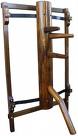
Wing Chun This unique fighting style began to take root in the late 1700s in China. It was originally developed by Ng Mui - a Shaolin nun - and named it in honor of her greatest disciple, Yim Wing Chun, which means "glorious springtime." After the destruction of the Shaolin Temple, Ng Mui began adapting a new system based on Shaolin techniques using simple, direct, and explosive attacks and counters. Wing Chun is a simple, compact system with only 3 hand forms (empty hand sets) and 2 weapon forms, which are the butterfly knives and the 6 1/2 point pole (8 foot staff). A Muk Jong (wooden dummy)(look to the left of screen) is used in training to strengthen, tone, and condition the arms and can also simulate a person attacking. Wing Chun stances and punches are similar to traditional Kung Fu. While this style prefers close quarters, jamming and pressing the opponent's limbs,Wing Chun also uses quick, aggressive actions to redirect the opponent's own force against him. This is accomplished by the quick, deceptive hand movements and kicks delivered to low, vital target areas. Many hand drills are taught, including Chi Sao, the Art of Sticky Hands. Using the Chi (internal energy) raising exercises called Chi-Kung, the student develops vibrating punches which are effective from 6 inches or less. Bruce Lee studied this style under Grandmaster Yip Man, and, with much practice, mastered the 1 inch punch, which can be lethal. A talented novice can acquire enough knowledge to mentally and physically defend himself well within 1 year. Sifu Winokur trained under Master Michael Lam for several years and was recognized as his 5th generation disciple in 2000. He has also been a disciple student and friend of one of his mentors, Master Randy K. Li, since June of 1990 - training in Wing Chun from 1990-1997. Sifu Winokur teaches a mixture of these two styles |
